From prototype to production: when you have to change PCBA supplier
The company that built your five prototypes is often not the company that should build your five thousand units — and the move between them is where budgets quietly disappear. This guide is about recognising the moment, understanding what re-qualification actually costs, and making the change less painful than it usually is.
- Decides switching cost3 things
- 1 · Is it frozenThe design?
- 2 · Is it completeThe documentation?
- 3 · ProofCan your supplier produce it?
What actually changes when a design goes to volume
Eight things that behave differently at 1,000 units than at 5 — most of them not on any quotation.
| What changes | Prototype / pilot run | Production run |
|---|---|---|
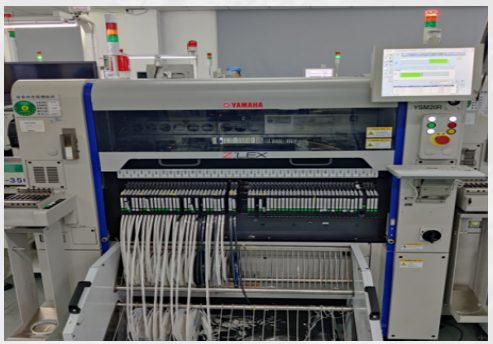
| Assembly method | Often partly or wholly hand-placed, with a technician looking at every board. | Machine-placed from a programmed line. No one looks at any individual board. |
| Stencil and tooling | One stencil, made to get you a sample quickly. | Stencil, panel layout and fixtures made to run repeatedly to the same standard. |
| Component source | Whatever is in stock in small quantity — sometimes bought through brokers. | Authorised distribution, one lot per build, traceable to a date code. |
| Programming | Done at a bench, one unit at a time; sometimes not done at all. | A step in the line, with a check that it succeeded before the board moves on. |
| Test method | “Does it power up?” | Functional test against a defined pass/fail, with inspection data you can keep. |
| Documentation | Gerber files and an email thread. | BOM with manufacturer part numbers, assembly drawing, test specification, first-article report. |
| Where the cost sits | The per-unit price is high and nobody is arguing about it. | The per-unit price is the entire conversation. |
| Who fixes a defect | The engineer who built it, from memory. | A documented corrective action — because the same defect will otherwise repeat on every board. |
The four questions that decide whether you can stay
Answer these honestly before you start interviewing suppliers. Most switches are caused by one of them, not by price.
1. Is the design frozen?
In the prototype phase, an engineering change order is an email and a rework. Once production tooling exists, an ECO means a new stencil, a new panel layout and possibly a new fixture. A supplier you can stay with is one where the layout has stopped moving — if you are still changing the board every month, no supplier change will fix that.
2. Is the volume predictable?
Prototype shops are organised to build tens. If your forecast is hundreds to thousands and climbing, you are asking a building that was never laid out for it to scale — and the symptoms are the ones you have probably already noticed: lead times slipping, prices revised upward, questions coming back to you that should have been answered internally.
3. Is the documentation complete?
Gerber files are not a production package. You also need the BOM with manufacturer part numbers, an assembly drawing, a test specification, and a clear written statement of what “good” means for your product. If any of that exists only in the prototype engineer's head, you will pay to have it written again at the new supplier — and you will discover the gaps at the worst possible moment.
4. Can your supplier produce evidence?
At low volume nobody asks. At volume your own customer starts asking for inspection data, a first-article report, traceability and a corrective-action record. If your current supplier cannot produce them, the switch is not a decision you are making — it is a deadline you are approaching. Which certifications your product needs →
What re-qualification actually costs
The quoted part is the smaller half.
The visible costs are straightforward, and you should expect to pay them at any new supplier: new stencils, a new panel layout, test fixtures if the volume justifies them, a first-article inspection, and the engineering time to review all of it. These usually come back as a one-time NRE line, and they are negotiable in the ordinary sense — quantity, timing, whether a fixture is worth building yet.
The larger cost is not on the quotation at all. It is the defect that a prototype build never had to expose. A prototype is built by people who look at every board; a production line is not. So the failure modes that appear at volume are the ones that were always present but were never given the chance to matter: a part that tombstones on a panel with a different thermal mass, a solder joint that passes inspection and fails after fifty thermal cycles, a connector that is 0.1 mm out on a hand-placed board and consistently out on a machine-placed one.
Signs you should switch — and signs you should not
Both lists are real. The second one is the one that saves money.
Switch when
- Your customer requires IATF 16949 or ISO 13485 and your supplier does not hold it. This cannot be added after the fact.
- Your supplier cannot tell you where a component came from, or will not list manufacturer part numbers on the BOM.
- They will not provide inspection data or a first-article report — not cannot build it, will not report it.
- The design is frozen, the volume is stable, and the price per unit is still being quoted as if it were a prototype.
- Your order has outgrown what one site can absorb, and the slippage is now structural rather than occasional.
- Parts are being brokered without traceability, and nobody will say so plainly.
Stay when
- Your volume is genuinely small and stable — a few hundred units a year, high mix. A supplier set up for small batches is the cheaper answer, and changing would cost more than it saves. Where small-batch cost actually goes →
- The design is still changing. Tooling bought now is tooling bought again next quarter.
- The unit-price difference is smaller than the cost of re-qualification. Do the arithmetic for the first year, not the first order — a 12% saving on 500 units rarely covers a new fixture and a new first article.
How to make the switch survivable
Five things, in order, that decide whether the new supplier's first build matches the old one's last.
- Freeze the design, then freeze the BOMDown to the manufacturer part number. This single step is what makes two factories produce the same board.
- Establish who owns the toolingStencils and fixtures are usually paid for by you. Make sure you receive them, or get a written statement that they exist and where they are stored.
- Require a first article on the first production lotInspect it against the drawing, not against a sample board from the previous supplier.
- Run both suppliers in parallel for one lotExpensive, and still cheaper than a stopped production line.
- Keep the prototype supplier for reworkAnd for small engineering runs. It is the work a production line is bad at.
Where we sit in this
Hongrong builds from 1 piece with no minimum order quantity, and the same site in Bao'an builds up to 10,000 units on the lead-time schedule published in our FAQ; above that a run is scheduled individually. For us, the change described in this guide is a change of scale rather than a change of supplier — the board does not move buildings, and the documentation written at the prototype stage is the documentation the production run is built against.
Whether that is right for your product is a separate question, and it has an honest answer on the who we are right for page — including the cases where you should go elsewhere.
Common questions
Do I have to change supplier when I go from prototype to production?
Not necessarily — four questions decide it: is the design frozen, is the volume predictable, is the documentation complete, and can your supplier produce evidence. Most switches are caused by one of those, not by price. Hongrong builds from one piece with no minimum order quantity, and the same site in Bao’an builds up to 10,000 units, so for our customers the change described in this guide is a change of scale rather than a change of supplier.
What does a production package need beyond Gerber files?
Gerber files on their own are not a production package. You also need the BOM with manufacturer part numbers, an assembly drawing, a test specification, and a clear written statement of what good means for your product. If any of that exists only in the prototype engineer’s head, you will pay to have it written again at the new supplier — and you will discover the gaps at the worst possible moment.
What does switching supplier actually cost?
The visible part is new stencils, a new panel layout, test fixtures if the volume justifies them, a first-article inspection, and the engineering time to review all of it. Those usually come back as a one-time NRE line and are negotiable in the ordinary sense. The larger cost is not on the quotation at all: the defect a prototype build never had to expose, because a prototype is built by people who look at every board and a production line is not. That is why the first production lot should be approved, not just delivered.
Related guides
Small-batch PCBA: where the cost actually goes
Why 100 boards cost so much per unit — stencils, setup, component minimums and test fixtures — and eight ways to bring the price down.
Which quality certification does your product need?
IATF 16949, ISO 9001 and ISO 13485 compared — and why a certification requirement is often what forces a supplier change.
Frequently asked questions
MOQ, lead times by order quantity, component sourcing, certifications, board size limits and testing.